MF-B4 Premium 1.6m Heated Flatbed Laminator - Multi-Functional
Applicator for Signs & Graphics
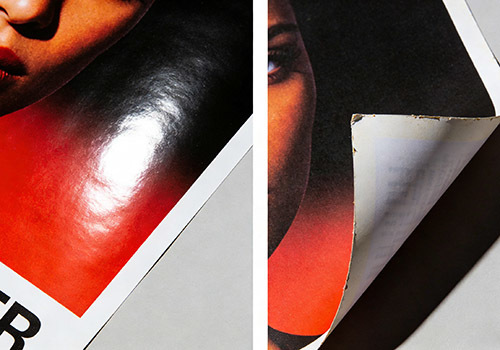
Is there a big difference between laminated and unlaminated?
The difference is huge, especially for photos, posters, documents,
and advertising images. Applying a film or not applying a film
results in completely different user experiences and lifespans.
Summary
- Short-term use, cost-saving → no lamination required
- For preservation, aesthetics, and durability → lamination is a must
- For everyday photos, ID cards, posters, and display boards: the
difference in quality is very noticeable with lamination.
Expert Commentary:
The significance of flatbed laminating machines for large-format
images/signage
From "Uncontrollable Manual" to "Industrial Standardization": The
Revolutionary Power of MEFU MF-B4.
Traditional cold lamination or manual lamination often faces
problems such as bubbles, wrinkles, displacement, and delamination.
MEFU, as the industry benchmark for fully automatic laminators, has
completely rewritten this situation with its MF-B4 heated flatbed
laminator.

Premium MF-B4 Heated Flatbed Laminator| Professional Sign Making
Laminator | Multi-Functional
The MEFU Premium MF-B4 is a heated flatbed laminator designed for professional signage and large-format images. It
features heating and pneumatic pressurization and is compatible
with acrylic, KT board, PVC foam board, glass, and other materials,
as well as glossy, matte, and crystal films, balancing quality and
efficiency.


- Precision Pneumatic System: Uneven pressure during manual
lamination is a major cause of defective products. The MF-B4 uses
pneumatic lifting to maintain constant pressure, achieving 100%
seamless lamination for both flexible posters and rigid boards.
- Heat-Assisted Control: The MF-B4 provides precise temperature
control. By preheating and weakening the physical tension of the
film material, it not only eliminates micro-air bubbles but also
significantly increases the adhesive viscosity, ensuring that "edge
curling" does not occur even in extremely cold environments.
- Multi-Media Compatibility: Breaking the limitations of single
materials, the MF-B4 is compatible with KT board, PVC foam board,
and various high-end film materials (glossy and matte), enabling
multi-purpose use.
MF-B4 Heated Flatbed Laminating Machine Standard Operation Card
Key Points:
Wear protective gloves before operation; never touch the heating
rollers with bare hands; ensure the board/film material is
thoroughly cleaned of dust and impurities to prevent particles from
scratching the image; never touch the roller shaft while the
machine is running to ensure operational safety.
I. Pre-Start Preparations (Required)
- Site and Power Connection: Place the machine on a flat, hard
surface, leveling the machine to prevent shaking; connect the
matching power supply, and for pneumatic models, connect the air
pump, checking that the air pressure is stable at 0.6-0.8 MPa.
- Equipment Inspection: Clean dust, paper scraps, and impurities from
the feed table and rubber roller surface; check that the film roll
support and pressure roller components are not loose, and that the
heating rollers are undamaged and free of foreign objects adhering
to them.
- Film Loading Operation: Select the appropriate film material
(glossy/matte), load it onto the film roll, and secure it tightly;
slowly pull the film, passing the film head through the gap between
the upper and lower rollers, adjusting the film material to be
centered and without skewing, reserving a small amount of film head
for later use.
- Board Pre-treatment: Wipe the board to be laminated (KT
board/signboard), ensuring the surface is free of dust,
fingerprints, and raised particles. For large-format boards, level
them beforehand to avoid edge curling affecting the lamination
effect.
II. Precise Parameter Adjustment (Core of Heated Model)
- Power On: Turn on the machine's main power switch. The control
panel will light up; wait for the system self-check to complete.
- Temperature Setting: Press the heating switch and adjust the
temperature according to the film material: 35-45℃ for thin
paper/photo film, 45-60℃ for crystal film/thick film/signboard
film; wait for heating to complete and the temperature control
indicator light to stabilize before starting work. Never start the
machine before reaching the required temperature.
- Pressure Adjustment: Rotate the air pressure adjustment knob to
ensure uniform pressure and avoid uneven pressure, causing wrinkles
and bubbles.
- Speed Adjustment: Start with a low speed (slow setting) for initial
operation. After becoming proficient, the speed can be increased
according to the thickness of the board. For large-format and thick
boards, always run at a low speed to ensure proper lamination.
III. Formal Lamination Operation Process
- Board Placement: Place the board to be laminated stably on the
feeding platform, aligning the front end of the film, ensuring the
board is centered horizontally and parallel to the edge of the
film, avoiding skewing.
- Film Peeling and Positioning: Gently peel off the outer film to
expose the adhesive side. Place the film backing paper flat under
the rollers, ensuring it is evenly spread and smooth against the
feeding table, without curling or wrinkles.
- Backing Paper and Film Pulling: Gently pull the end of the film
backing paper with one hand, maintaining even pressure and pulling
slowly to allow the backing paper and film to stretch
synchronously. Avoid forceful pulling that could deform or shift
the film, ensuring precise alignment between the film and the
substrate.
- Gantry Frame Movement and Lamination: Hold the gantry frame firmly
with both hands and push it smoothly and evenly in the feeding
direction. Use roller pressure to complete the lamination
operation. Maintain a consistent speed throughout the process,
avoiding sudden changes in speed to ensure a tight bond between the
film and the substrate, and to completely remove air bubbles and
wrinkles.
- Final inspection and adjustment: After the film is applied, slowly
reset the gantry frame and check the film application effect of the
entire board. If there are air bubbles in some areas, gently push
the gantry frame again to press them together a second time. After
confirming that everything is correct, trim off any excess film
edges and clean up the finished product and waste.
- Trimming: Use the matching cutter or utility knife to trim excess
film edges along the sheet material, ensuring clean cuts without
burrs. Stack the finished products neatly and allow them to cool
and set.
IV. Shutdown Procedures
- Turn Off Heating First: After completing the operation, turn off
the heating switch first. Do not directly disconnect the power to
avoid overheating and damaging the heating rollers.
- Idle Cooling: Let the machine idle for 1-2 minutes to allow the
heating roller temperature to drop to room temperature before
stopping the roller rotation.
- Power and Air Disconnection: Turn off the main power supply to the
machine. For pneumatic models, close the air pump valve and purge
any residual air from the pipeline.
- Cleaning and Maintenance: Clean the work surface and rollers of
residual waste and dust; remove and properly store any remaining
membrane material, wipe the machine body, and keep the equipment
clean.
V. Common Problems and Emergency Handling
- Membrane Bubbling: Appropriately increase the temperature,
pressure, and speed; check for impurities in the sheet
material/membrane.
- Membrane Wrinkling: Relax the membrane roll tension, readjust the
membrane material to center, and check if the rollers are balanced.
- Edge Warping: Extend the tail pressing time, increase edge
pressure, and confirm that the sheet material is not warped and the
temperature is within specifications.
- Membrane Scratches: Immediately stop the machine, clean the rollers
and sheet material surface of any particles and impurities, and
replace with undamaged membrane material before resuming operation.
Investing in the MEFU MF-B4 is not just about improving quality,
but also about recovering profits.
In industrial production, a 60% yield rate means you're on the
verge of losses, while a 95% yield rate is your core competitive
advantage. If you're still paying the price for material waste and
rework caused by manual lamination, the MEFU MF-B4 will be your
turning point from losses to profits. Based on a daily output of
100 pieces, the cost savings brought by the MF-B4 through improved
yield and production speed can typically fully cover the machine's
initial investment within 4-6 months.